
How to Support Your Wife Through Menopause | Heather Hirsch
Your wife is somewhere in her forties. Something has changed and neither of you can name it. She is not sleeping. Her fuse is shorter than it was. She has said some version of “I just don’t feel like myself,” and you have quietly wondered whether it is the marriage, the job, the kids, or you.
It is probably none of those.
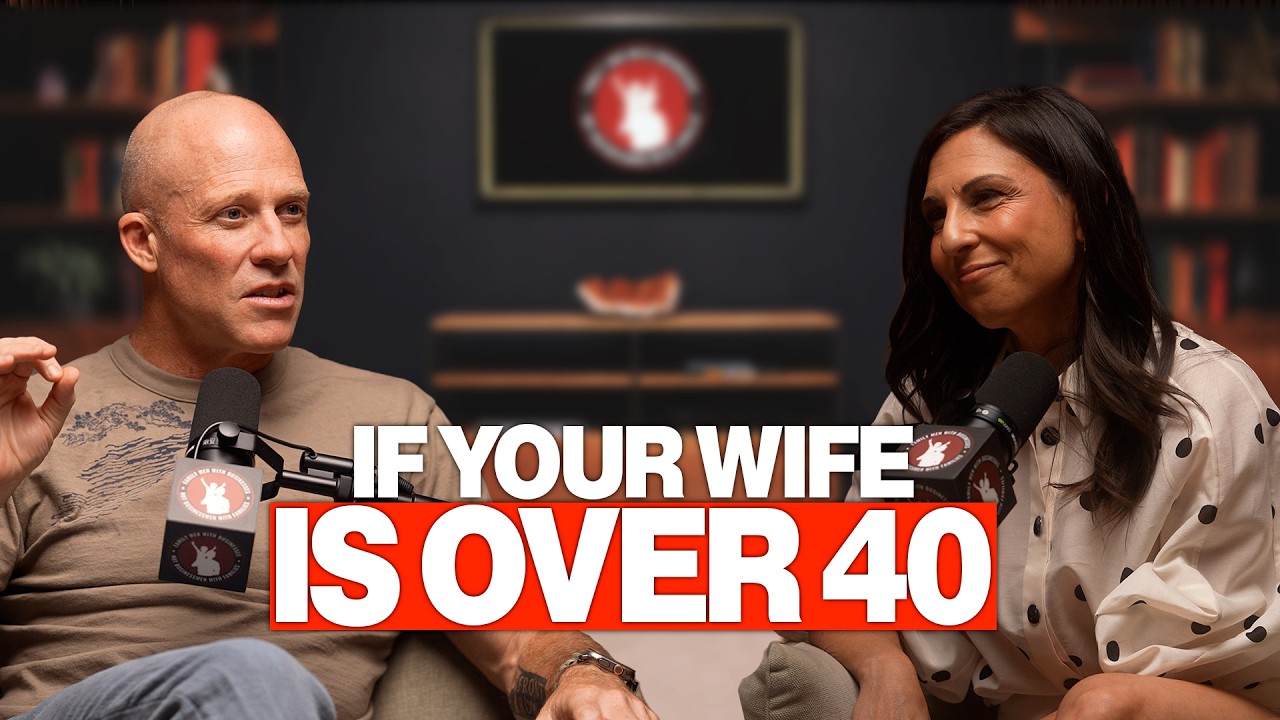
Dr. Heather Hirsch is board certified in internal medicine, founded the Menopause and Midlife Clinic at Brigham and Women’s Hospital, and taught at Harvard Medical School. She has treated thousands of women through this transition. She flew to Austin to have this conversation with Jon Vroman because, as she puts it, almost every conversation she has about menopause is with women. The men who share a bed, a marriage, and a family with them never get briefed.
What is perimenopause, and when does it start?
Start with the definitions, because most men have them wrong.
Menopause is a single day. As Hirsch defines it, “Menopause is when a woman has not had a period in a year.” The average age is 51 and a half, and she notes it is inching slightly upward.
Perimenopause is everything before that day, and it is the part that matters to you. It usually begins in a woman’s forties, and it can last a decade. That is the number most couples do not know. You are not looking at an event at 51. You are looking at a runway that may have started years ago.
Her image for what is happening is a failing light bulb. The ovaries do not switch off. They flicker, releasing hormones unevenly, for years, before going quiet.
And nobody announces it. In her words, “you don’t get this like letter in the mail that’s like, you are in perimenopause.”
The first sign is not a hot flash
This is the single most useful thing in the episode for a husband.
Progesterone falls before estrogen does. Progesterone is the calming hormone, so the first symptoms are usually anxiety and broken sleep, not hot flashes. A couple can spend years treating that as stress, or a work problem, or a marriage problem.
Hirsch missed it in herself, and she has been doing this for more than a decade. She had hot flashes and blamed the heating. She had brain fog and blamed the coffee. Her test is not any single symptom. It is this: the things that used to work have stopped working. If journaling, a walk, a bath, or a good night’s sleep no longer resets her the way they used to, and she is in her forties, that is the signal.
How does menopause affect the husband?
Directly, and usually in ways he misreads.
Estrogen acts as a natural antidepressant in the brain. When it swings, mood swings with it, and Hirsch is blunt that this is physiological rather than personal. She describes patients who have the life they wanted, the marriage they wanted, and still do not feel like themselves.
There is a timing problem on top of it. Her forties tend to collide with aging parents, teenagers, and a man’s own hardest decade. Hirsch calls it a perfect storm, and it is worth knowing that you are both inside it at once.
The misread that does the most damage is taking it personally. Changes in touch, in sleep, in intimacy are symptoms, not verdicts on the marriage.
What symptoms should you expect?
About 75% of women get symptoms, and roughly a quarter of those describe them as severe. Her line on that: “even having one hot flash is just as bad as having 10.”
The ones she covers: sleep that breaks for no reason, weight that will not move on the same effort, brain fog (which her own research found hits quality of life hardest), itchy or crawling skin, sensitivity to touch and noise and light, running hot, and pulling back from people she used to enjoy.
How should a husband bring it up?
Carefully, and without a diagnosis attached.
What not to do is arrive with a conclusion. She names the failure mode directly: “I think a mistake would be like, oh my gosh, you must have this.” Anything that sounds like “this explains everything” lands as an accusation.
What she suggests instead is open-ended and low-stakes. Send her something and say you saw it and thought she might want to look. Then have the conversation on a walk rather than across a table, because side by side is easier than face to face. And go at her pace, not yours.
Why she may see five to seven doctors first
This is the part most husbands do not see coming. “The statistics are they see five to seven different doctors” before the problem is adequately treated or diagnosed.
The reason is training. Hormone therapy went through a long backlash, and for roughly two decades prescribing it largely stopped being taught, so a generation of clinicians came up without it. Getting a shrug from a doctor is not the end of the road.
Hirsch describes it as a part-time job of trying to figure out her own health. That job is the most concrete thing a husband can take off her plate: find the clinician, make the call, sit in the waiting room.
Two places to look. The Menopause Society keeps a searchable directory at menopause.org, and Hirsch maintains her own directory of clinicians she has trained at heatherhirschdirectory.com.
Generational health
The idea in the episode most worth carrying out of it.
You already understand generational wealth. Hirsch argues the forties and fifties are where generational health gets decided, for both of you, and that what is at stake is whether you are the couple on the floor with grandchildren in thirty years.
It reframes the whole thing. This is not a problem to manage until it passes. It is the decade that sets up everything after it.
Questions dads ask about perimenopause and menopause
Q: What is the difference between perimenopause and menopause?
A: Menopause is one day, defined as twelve months since a woman’s last period, at an average age of 51 and a half. Perimenopause is the transition leading up to it. It usually starts in a woman’s forties and can last as long as a decade.
Q: What is the first sign of perimenopause?
A: Usually anxiety and disrupted sleep rather than hot flashes, because progesterone declines before estrogen does. Dr. Heather Hirsch’s practical test is whether the things that used to help, like a walk or a good night’s sleep, have stopped working.
Q: How can a husband support his wife through menopause?
A: Learn what is actually happening first. Raise it open-ended instead of arriving with a diagnosis. Have the conversation on a walk. Help her find a clinician who was trained in menopause care, and move at her pace rather than yours.
Q: How does menopause affect the husband?
A: Mood, sleep, touch and intimacy all change, and men commonly misread these as problems in the marriage. They are physiological. The transition also tends to land at the same time as aging parents and teenagers, which Dr. Hirsch calls a perfect storm for both partners.
Q: What should a husband never say?
A: Anything that arrives as a diagnosis or a verdict, such as “this explains everything.” It lands as an accusation rather than an offer of help.
Q: Does menopause affect marriage?
A: It can. Dr. Hirsch notes that divorce in midlife has been rising, while being careful that the causes are mixed and include financial independence, not menopause alone. What she argues is that how a couple handles this decade matters more than the symptoms themselves.
Q: How long does perimenopause last?
A: It varies, and it can run as long as ten years before menopause itself.
Q: Do all women go through menopause?
A: Yes. As Dr. Hirsch puts it, 100% of women, as long as they live long enough. About 75% experience symptoms.
Q: How do you find a menopause specialist?
A: The Menopause Society has a provider directory searchable by zip code at menopause.org. Dr. Hirsch also maintains a directory of clinicians trained through her program at heatherhirschdirectory.com.
More About Front Row Dads
Connect with us @ FrontRowDads.com & Instagram.
FRD is solving a huge problem for dads. Our culture has turned “Dad” into a joke. Go ahead, google Dad and you’ll find Dad Bod, Dad Jokes, Dad Weed, etc. Culturally, it’s a Homer Simpson mentality, and it’s BS.
Our community is built for solid men. Men with range. Those who are badass, and know there’s still more to learn, together. Most guys find it hard to find “their crew.” Finding other committed men who are successful in life and want to put family first. These guys are rare. Is this you? In FRD, hundreds of men from all over the world show up for each other, to share resources and raise the bar of fatherhood (our core values.) If you’re reading this, you want to grow.
Podcasts are great, but guys, when you’re ready to stop just listening to content and want to JOIN the conversations, the FRD brotherhood is ready for you. One more thing… Has this podcast helped you? If so, please tell us how we’re doing. Please take a minute and leave a review. Seriously, they matter. Apple Podcasts, Spotify, or wherever you listen.