
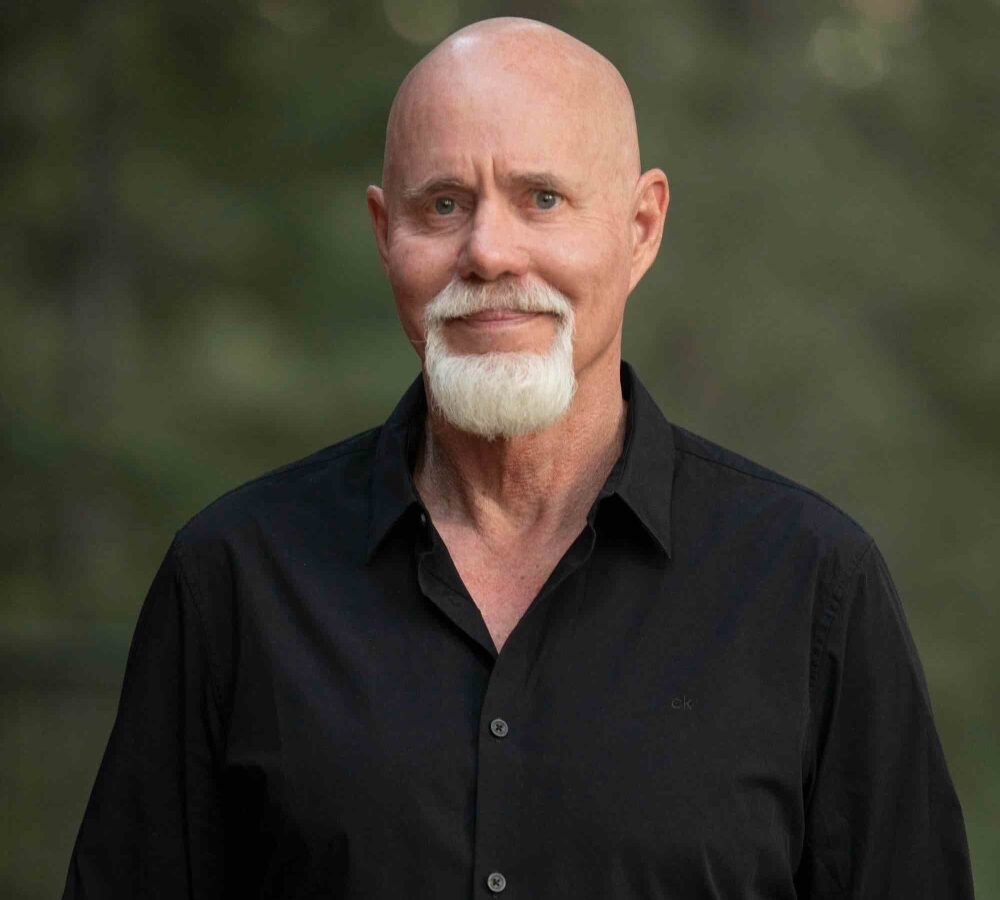
Mr. Nice Guy Syndrome & Managing Boundaries, Shame and Our Triggered Nervous Systems with Dr. Robert Glover
Most men who get called “nice” have no idea it’s costing them anything.
You do the extra work. You don’t make a fuss. You handle what needs handling before anyone has to ask. And underneath it, if you’re honest, there’s a resentment you can’t quite account for, because on paper you’re the one doing everything right.
Dr. Robert Glover wrote No More Mr. Nice Guy after his second wife told him something he wasn’t ready to hear. He sat down with Jon Vroman to explain where the resentment comes from, and it starts with a deal you never told anyone you’d made.
What is a covert contract?
A covert contract is an agreement you make with someone who never agreed to it. You hold up your end. You wait for them to hold up theirs. They don’t, because they were never told there was a deal. And you end up quietly furious at somebody who hasn’t done anything wrong.
The nice guy thinks he’s being generous. He’s keeping score.
The three covert contracts
Glover names three:
- If I’m a good guy, I’ll be liked and loved, and you owe me back.
- If I read your mind and give you what you need without you asking, you’ll read my mind and give me what I want without me asking.
- If I do everything right, I’ll have a smooth and problem-free life.
The third has a trap inside it that Glover points at directly:
“If I do everything right, then I will have a smooth and problem-free life. Well, life isn’t smooth and problem-free. And how do we know we’ve done everything right? Because we’re the scorekeeper.”
Read the second one again with your marriage in mind. Most of the “I do everything around here and nobody notices” arguments in a house are that contract coming due.
The nice guy and the jerk are the same man
Men who find this work usually land in the same place: fine, being a nice guy isn’t working, but I don’t want to overcorrect into being a jerk. There must be a healthy middle.
Glover says there’s no middle, because both ends run on the same fuel. The nice guy and the jerk are both driven by shame, fear, and anxiety. One manages it with flight and freeze. The other manages it with fight. Neither one is being himself.
The shame underneath both is older than either strategy:
“Shame is an inaccurately internalized belief, often at a very young age”
It isn’t a thought you have. It’s the thing you built the personality on top of.
The two types of nice guys
Glover splits them.
The “I’m so good” nice guy has shame buried deep. He went underground as a child, avoids conflict, and spends his life proving he’s good.
The “I’m so bad” nice guy has shame closer to the surface. He was the acting-out kid. He wears niceness like a jacket and lives with a low-grade fear of being found out.
What to do when your wife triggers you
Glover is unusually blunt that knowing this material doesn’t protect you from it:
“We can know stuff. We can read every self-help book. We can go to therapy. We can go to workshops. But this stuff is so deep in our nervous system.”
His practice for the moment it happens is four words: ground, breathe, open, get curious. Get your weight down into your body. Find an easy breath. Drop the judgment that this should be going differently. Then get curious about your reaction and hers.
Once you’re regulated, he runs three questions: is she not feeling sufficiently loved right now, not feeling sufficiently connected, or not feeling sufficiently safe? And then, is there anything you can do about any of those three?
This matters most when what she says isn’t factually true. Arguing the facts wins the point and loses the marriage. What a couple is fighting about is usually not what they’re fighting about.
What boundaries are actually for
“boundaries aren’t about getting other people to be different. They’re about getting you to be different.”
And the part most men have backwards:
“boundaries are actually what allow us to let people close to us. Because if we don’t have boundaries, we’re not going to let people get close to us. We’re going to build walls or just avoid people altogether.”
Glover went deeper on this in a later conversation on setting boundaries without guilt, and on building stronger boundaries with your wife and kids.
Questions dads ask about Nice Guy Syndrome
What are covert contracts?
A covert contract is an unspoken deal where you do something for someone expecting something back, without ever telling them the deal exists. You perform your side, they don’t perform theirs because nobody told them, and you end up resentful at a person who did nothing wrong. Dr. Robert Glover identifies three of them in No More Mr. Nice Guy.
What are the three covert contracts?
One, if I’m a good guy I’ll be liked and loved and you owe me back. Two, if I meet your needs without you asking, you’ll meet mine without me asking. Three, if I do everything right, life will be smooth and problem-free.
Is being a nice guy the opposite of being a jerk?
No. Glover says both are driven by shame, fear, and anxiety. The nice guy manages it with flight and freeze; the jerk manages it with fight. There is no healthy middle between two versions of the same problem.
Why do nice guys get angry?
Because covert contracts keep coming due and nobody pays. He gave without being asked, waited to be given to without asking, and the resentment builds where the unspoken deal was.
What are the two types of nice guys?
The “I’m so good” type buried his shame early, avoids conflict, and works to prove he’s good. The “I’m so bad” type carries shame near the surface, was often the acting-out child, and fears being found out.
How do you stop getting triggered by your wife?
Ground, breathe, open, get curious. Then ask whether she’s not feeling sufficiently loved, connected, or safe right now, and whether there’s anything you can do about any of the three. Treat an emotional statement as a need, not a factual claim to be argued.
“Both the nice guy and asshole jerk are driven by shame, fear, and anxiety. And I think both stay in a pretty constant state of fight, flight, freeze.” - Dr. Robert Glover Share on XResources:
- Robert Glover.com
- Follow Dr. Robert Glover on Facebook | LinkedIn | YouTube
- No More Mr Nice Guy: A Proven Plan for Getting What You Want in Love, Sex, and Life by Robert Glover
- Robert’s Podcast: Intention Into Action and Dating Essentials for Men
- Jayson Gaddis
- Viktor Frankl
- Awareness by Anthony de Mello
- Kelly Flanagan
- Serenity Prayer
- Healing the Shame that Binds You by John Bradshaw
Dr. Robert Glover Bio
Dr. Robert Glover is a seasoned therapist, coach, speaker, and educator with more than 40 years of expertise in relationships. He is the acclaimed author of several bestsellers, including “No More Mr. Nice Guy” and “Dating Essentials for Men,” as well as his latest work, “Dating Essentials for Men: Frequently Asked Questions.” Over the decades, Dr. Glover has guided thousands of men around the globe, helping them achieve transformational changes in their relationships, careers, and sex lives.
More About Front Row Dads
Connect with us @ FrontRowDad.com & Instagram
Want to hang out with other FRDs in Austin? Watch this 3-min video from our last Front Row Dads Live event. Tickets avaiable now for December’s event.
Not able to travel? We got you. Join our next online event, built just for kickass dads who know there’s more to learn. FrontRowDads.com/summit
FRD is solving a huge problem for dads. Our culture has turned “Dad” into a joke. Go ahead, google Dad and you’ll find Dad Bod, Dad Jokes, Dad Weed, etc. Culturally, it’s a Homer Simpson mentality, and it’s BS.
Our community is built for solid men. Men with range. Those who are badass, and know there’s still more to learn, together.
Most guys find it hard to find “their crew.” Finding other committed men, who are successful in life, and want to put family first – these guys are rare. Is this you?
In FRD, hundreds of men from all over the world show up for each other, to share resources and raise the bar of fatherhood (our core values.)
If you’re reading this, you want to grow. Podcasts are great, but guys… when you’re ready to stop just listening to content, and want to JOIN the conversations – the FRD brotherhood is ready for you.
One more thing…
Has this podcast helped you? If so, please tell us how we’re doing. Please take a minute and leave a review. Seriously, they matter. Apple Podcasts, Spotify, or wherever you listen.
Subscribe to this show on Apple Podcasts | Google Podcasts | Spotify